Building muscle is a great way to improve your strength, support overall fitness, and feel more confident in your daily life. However, if you are new to fitness, knowing where to start can feel confusing. The good news is that you do not need an advanced workout routine or expensive equipment to begin building muscle.
With consistent strength training, balanced nutrition, proper rest, and a realistic plan, beginners can gradually develop strength and muscle mass.
In this beginner-friendly guide, we will explain how to build muscle, which exercises to focus on, what foods to eat, and how to create a sustainable workout routine.
1. Start With a Beginner-Friendly Workout Plan
The first step in building muscle is establishing a consistent workout routine. Beginners should focus on learning proper exercise techniques before lifting heavy weights.
Strength training challenges your muscles, encouraging them to adapt and become stronger over time. You can start with bodyweight exercises, resistance bands, dumbbells, or gym machines.
Some effective exercises for beginners include:
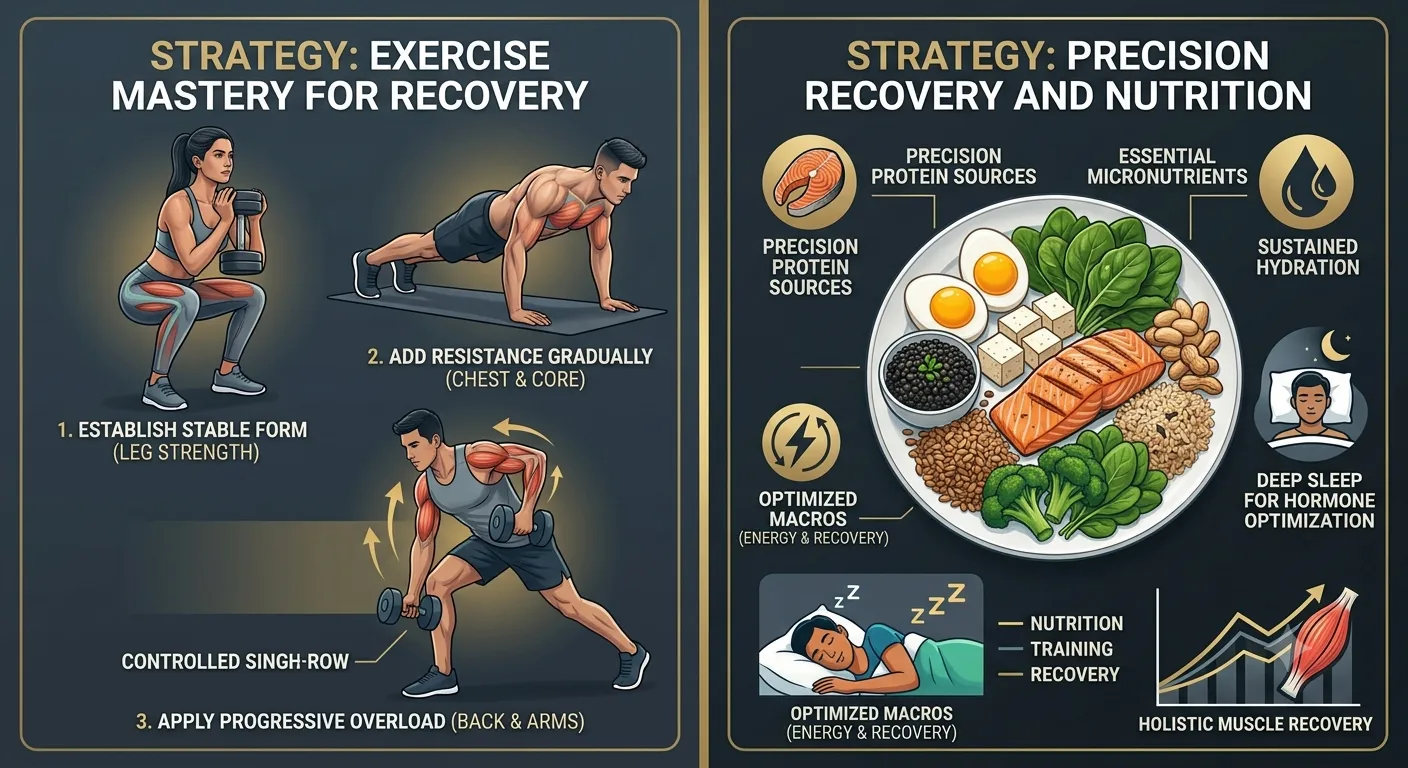
- Squats: Strengthen your legs and glutes.
- Push-ups: Target your chest, shoulders, and triceps.
- Dumbbell rows: Strengthen your back and arms.
- Lunges: Improve lower-body strength and balance.
- Planks: Help strengthen your core.
Aim to perform strength training two to three days per week initially, allowing time for recovery between challenging sessions. Choose exercises that match your current fitness level and gradually increase the difficulty as you improve.
2. Focus on Compound Exercises
Compound exercises work multiple muscle groups at the same time. They are especially useful for beginners because they help develop overall strength and make workouts more efficient.
Examples include squats, lunges, push-ups, rows, and variations of deadlifts.
For example, squats work your quadriceps, glutes, and other muscles involved in lower-body movement. Push-ups engage your chest, shoulders, triceps, and core.
When performing these exercises, prioritize controlled movements, proper form, and a comfortable range of motion. If you are unsure about your technique, consider asking a qualified fitness professional for guidance.
3. Eat Enough Protein and Balanced Foods
Nutrition plays an important role in muscle growth. Your body needs sufficient energy, protein, carbohydrates, healthy fats, vitamins, and minerals to support exercise and recovery.
Protein provides amino acids that help your body repair and build muscle tissue after training.
Good sources of protein include:
- Eggs
- Chicken and fish
- Milk, yogurt, and paneer
- Beans, lentils, and chickpeas
- Tofu and soy products
- Nuts and seeds
For many healthy adults who exercise regularly, a daily protein intake of approximately 1.4–2.0 grams per kilogram of body weight can support muscle development. Individual needs vary depending on activity level, age, health, and fitness goals.
Carbohydrates from foods such as oats, rice, potatoes, fruits, and whole grains provide energy for workouts. Healthy fats from nuts, seeds, olive oil, and other nutritious foods also help support overall health.
You do not need an expensive supplement to get started. Focus on a balanced diet that provides enough calories and nutrients to support your training.
4. Gradually Increase Your Workout Intensity
One important principle of muscle building is progressive overload. This means gradually increasing the challenge placed on your muscles as your strength improves.
You can do this by:
- Increasing the weight you lift slightly.
- Performing an additional repetition with good form.
- Completing an extra set when appropriate.
- Improving your control and exercise technique.
- Choosing a more challenging exercise variation when you are ready.
For example, if you can comfortably complete your planned repetitions of an exercise with good technique, you may gradually increase the resistance.
Avoid increasing the weight too quickly. Progress should be steady and manageable, not based on lifting the heaviest weight possible.
5. Get Enough Sleep and Recovery
Your muscles need time to recover after challenging workouts. Training every muscle intensely every day can make recovery more difficult and may increase your risk of injury.
To support muscle growth:
- Aim for seven to nine hours of sleep each night if you are an adult.
- Allow adequate recovery between challenging sessions for the same muscle groups.
- Stay hydrated throughout the day.
- Eat regular, balanced meals.
- Include rest days and light activities such as walking when appropriate.
Remember that recovery is part of your fitness plan, not a break from progress. Consistent training combined with sufficient rest helps you build strength over time.
6. Follow a Simple Weekly Workout Schedule
A simple routine can help beginners develop consistency without feeling overwhelmed. Here is an example of a three-day full-body strength training schedule.
Monday: Full-Body Workout
- Squats
- Push-ups
- Dumbbell rows
- Glute bridges
- Planks
Wednesday: Full-Body Workout
- Lunges
- Dumbbell shoulder presses
- Lat pulldowns or resistance-band rows
- Hip hinges with light weights
- Core exercises
Friday: Full-Body Workout
- Squats or leg presses
- Incline push-ups or chest presses
- Seated rows
- Glute bridges
- Planks
Start with a manageable number of sets and repetitions based on your fitness level. Use lighter resistance while learning each movement, and take rest days between these sessions. Adjust the schedule to suit your experience, equipment, and recovery needs.
7. Common Muscle-Building Mistakes to Avoid
Beginners sometimes make simple mistakes that slow their progress or make training less effective.
Lifting too much weight too soon: Heavy weights are not necessary when you are learning. Proper technique and controlled movements should come first.
Skipping meals or eating too little: Your body needs sufficient energy and nutrients to recover from training and build muscle.
Changing workouts too frequently: Following a consistent plan gives you time to learn exercises and measure your progress.
Ignoring recovery: Sleep and rest are essential parts of a balanced training routine.
Expecting immediate results: Muscle development takes time. Focus on gradual improvements in strength, exercise technique, and consistency rather than expecting dramatic changes in a few weeks.
Comparing your progress with others: Everyone responds to exercise differently. Your results depend on factors such as training history, nutrition, sleep, genetics, and individual circumstances.
8. Frequently Asked Questions About Building Muscle
How long does it take to build muscle as a beginner?
Some beginners notice improvements in strength within a few weeks. Visible muscle changes generally take longer and vary from person to person. Consistent training, sufficient nutrition, and recovery all influence your progress.
Can I build muscle at home without a gym?
Yes. Bodyweight exercises such as squats, push-ups, lunges, and planks can help beginners build strength at home. Resistance bands and adjustable dumbbells can provide additional options as you progress.
How many days a week should beginners train?
Two to three strength training sessions per week are a practical starting point for many beginners. Your schedule should allow adequate recovery and fit your current fitness level.
Do I need protein supplements to build muscle?
No. Many people can meet their protein needs through foods such as eggs, dairy products, lentils, beans, fish, chicken, and tofu. Supplements are optional and should not replace a balanced diet.
Should I do cardio while trying to build muscle?
Yes. Activities such as walking, cycling, and swimming can support cardiovascular health alongside strength training. Balance your cardio sessions with your recovery needs and overall fitness goals.
Conclusion
Learning how to build muscle does not have to be complicated. Start with a beginner-friendly strength training plan, focus on proper exercise technique, eat balanced meals with enough protein, and give your body time to recover.
Consistency matters more than perfection. By building healthy habits and gradually challenging yourself, you can develop strength and make steady progress toward your fitness goals.
Ready to take the next step in your fitness journey? Explore ABEX Fitness for guidance and support as you work toward a stronger, healthier lifestyle.